The Right to Repair: Why You Don't Truly Own Your Devices Anymore
From glued-in batteries to parts pairing and software locks, how modern consumer electronics are built to resist repair — and the global movement fighting back.
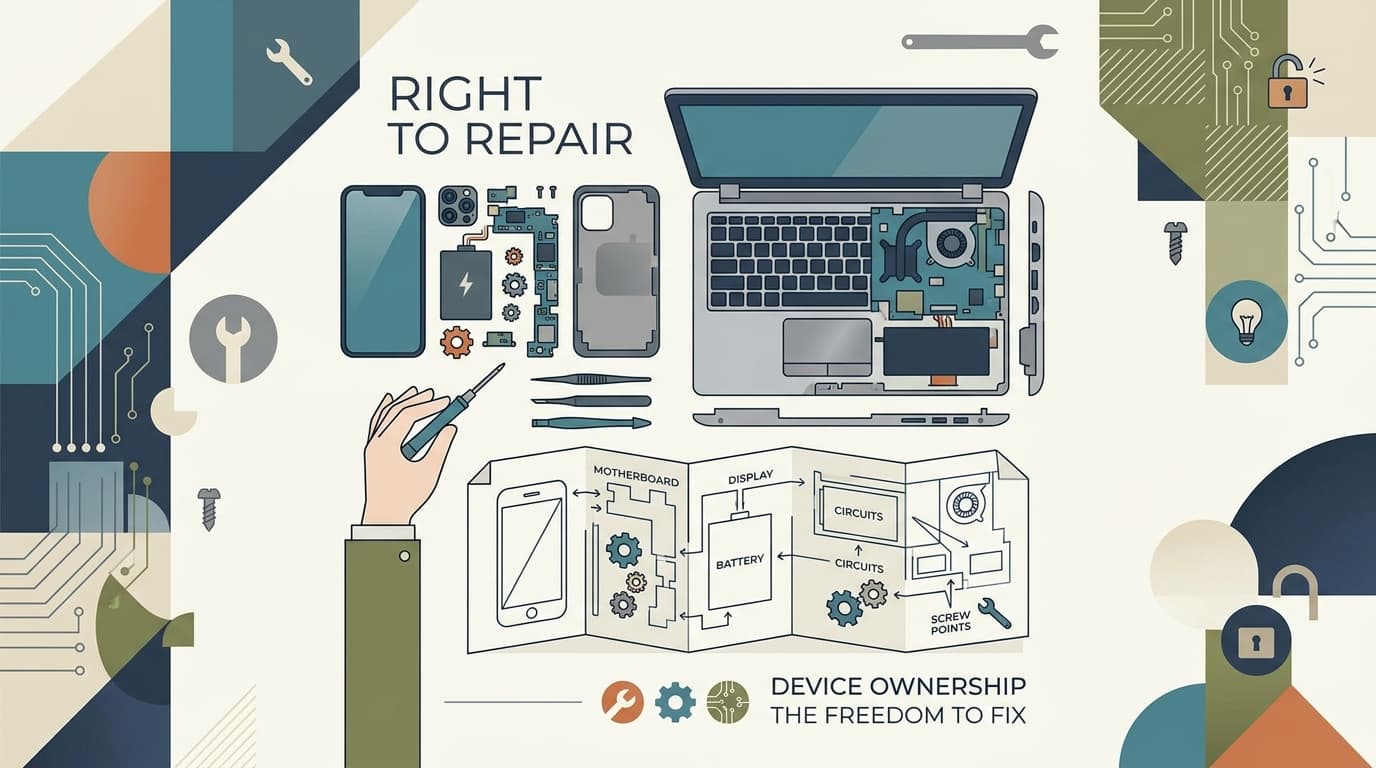
If you drop your phone and shatter its screen, or if your laptop's battery ceases to hold a charge after three years, your instinct should be simple: buy a replacement part, open up the case, and fix it.
Yet for millions of consumers around the world, this basic act of ownership has become an uphill battle. In recent decades, technology companies have systematically engineered consumer electronics not just for performance or portability, but for unrepairability.
Between proprietary screws, industrial adhesives, serialized parts pairing, and restricted access to diagnostic software, the message from manufacturers is unmistakable: you may have paid full price for the machine in your pocket, but you only license the right to use it on their terms.
The mechanics of locked-down hardware
How did we get here? Hardware manufacturers employ a variety of design and legal tactics that make independent repair virtually impossible:
- Glued assemblies: Removable screws have been replaced by heavy industrial adhesives. Swapping a degrading lithium-ion battery often requires heat guns, suction cups, and toxic solvents, turning routine maintenance into a hazardous operation.
- Parts pairing (serialization): Even if you obtain an identical, authentic component from another device, software DRM may reject it. Modern phones frequently disable features like True Tone, auto-brightness, or biometric sensors unless the replacement part has been cryptographically authorized by proprietary factory tools.