
Plant-Based vs. Omnivore: What the Science Says Beyond the Diet Wars
Few lifestyle choices spark as much emotional tribalism as what we eat. Beyond the online debate, here is what nutritional epidemiology and clinical biochemistry actually reveal about the benefits, blind spots, and common ground of both approaches.
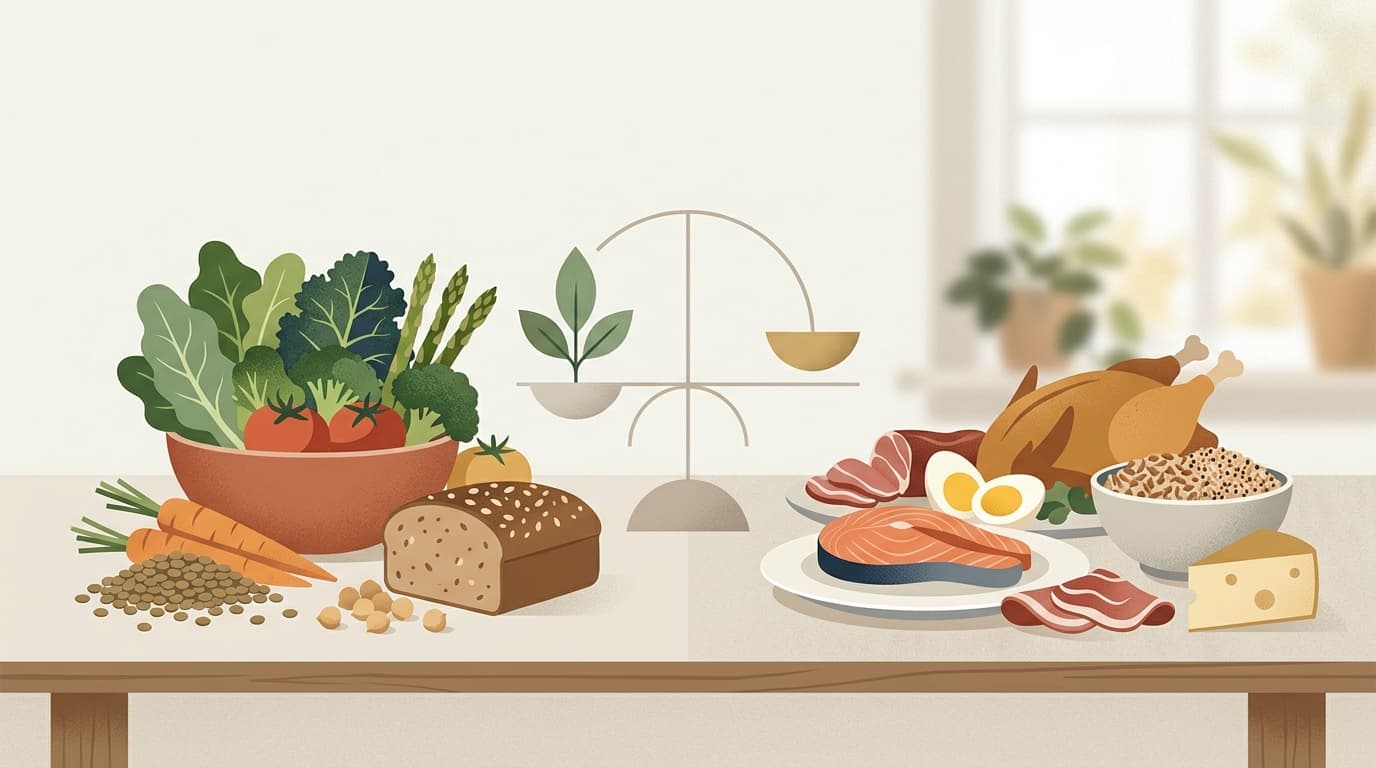
Few personal choices in modern life spark as much intense debate as the food on our plates. What began as a question of personal sustenance has evolved into a cultural battleground. Online discourse routinely pits plant-based advocates and omnivores against one another in a clash of moral superiority, selective studies, and dramatic caricatures.
On one side, omnivores are sometimes accused of indifference toward ethics, health, and the environment. On the other side, vegans are frequently dismissed as dogmatic or nutritionally deficient.
When you step away from social media algorithms and examine peer-reviewed nutritional epidemiology and human biochemistry, however, ideological certainty dissolves into nuanced physiological reality. Both dietary patterns possess well-documented physiological strengths, distinct clinical blind spots, and legitimate underlying motivations.