
The Science of Habit Formation — What Actually Works Beyond the 21-Day Myth
Debunking the popular '21 days to form a habit' claim, with what research actually shows and a simple, repeatable system for building lasting routines.
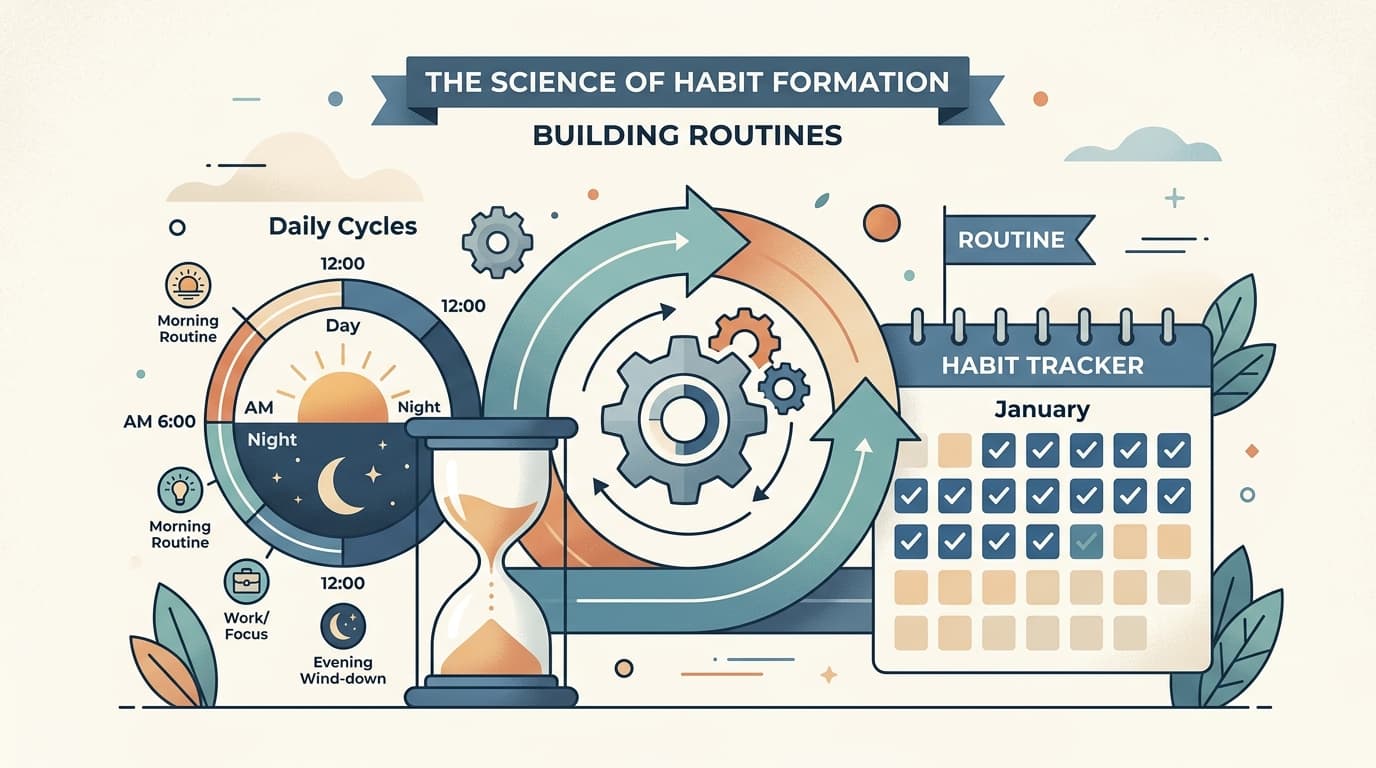
If you have ever tried to build a new habit, you have probably heard the golden rule: it takes exactly 21 days to form a new routine. It is a comforting idea. It implies that if you can just grit your teeth and force yourself to go to the gym, meditate, or write for three weeks, a magical switch will flip, and the behaviour will become effortless.
The problem is that the 21-day rule is a myth. Understanding where it came from—and what the science actually says—is the key to building routines that last long after your initial motivation fades.
The origin of a persistent myth
The 21-day figure traces back to Dr. Maxwell Maltz, a plastic surgeon in the 1950s. In his book Psycho-Cybernetics, Maltz observed that it took his patients a minimum of about 21 days to get used to seeing their new faces, or to stop feeling a phantom limb after an amputation.
Maltz was careful to write that it took "a minimum of about 21 days" for an old mental image to dissolve. But as the claim was repeated in self-help seminars and pop-psychology books over the decades, "a minimum of 21 days" was shortened to "takes 21 days." A subjective observation about surgical recovery became a universal law of behaviour change.